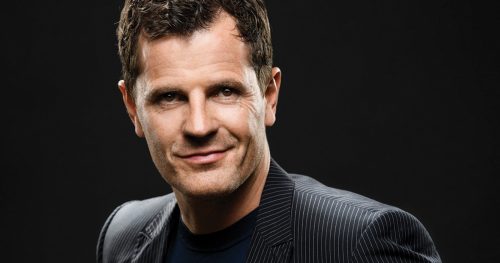
Martin Österdahl new executive supervisor

Martin Österdahl will be the new executive supervisor of the Eurovision Song Contest and the Junior Eurovision Song Contest. After this year’s contest, he will take over the job from Jon Ola Sand. The European Broadcasting Union (EBU) announced the news today.

Martin Österdahl is a television producer. You might know his work, as he produced both the 2013 and 2016 Eurovision Song Contests.

Jon Ola Sand was the executive supervisor of the Eurovision Song Contest since november 2010, after Svante Stockselius resigned.

Related news

History

Austria in the Eurovision Song Contest, part 7

This year’s Eurovision Song Contest has been won by Austria. It was the 57th Austrian entry. Reason for us to go back to all the Austrian entries in history! For Austria in the Eurovision Song Contest, part 7, we look back at the start of the 21st century. Alf Poier participated for Austria, but there were also some unsuccesful entries. And there was a 3-year gap. 2000 – The Rounder Girls – All To You Austria’s 2000 entry “All To You” was internally selected by broadcaster ORF. The song was written by American songwriter Dave Moskin. Moskin gave the three-piece vocal group The Rounder Girls an up-tempo, gospel-influenced pop track. Performing last in the Stockholm final, the trio, with members from Austria, the US and the UK, delivered slick harmonies and choreography. They finished 14th out of 24 countries with 34 points. The Rounder Girls were a seasoned soul/gospel ensemble, and their Eurovision appearance raised their profile, though Austria’s middling result meant the country sat out the contest in 2001. 2002 – Manuel Ortega – Say A Word “Say A Word” by Manuel Ortega won Austria’s “Song.Null.Zwei” 2002 national final out of ten songs. this entry was an upbeat pop song with a catchy, boy-band style hook. It was composed by Alexander Kahr with lyrics by Robert Pfluger. At Eurovision 2002 in Tallinn, Ortega performed third and Austria placed 18th (26 points) in the final. Manuel Ortega, a young pop singer, had scored a summer hit in 2001 and was nicknamed “the Austrian Ricky Martin” for his Latin pop flair. His Eurovision song’s fun choreography and positive message reflected that image, though the result was a lower mid-table finish. 2003 – Alf Poier – Weil der Mensch zählt ORF organized the “Song.Null.Drei” 2003 selection. Petra Frey (ESC 1994) was the runner up. Comedian-singer Alf Poier triumphed with “Weil der Mensch zählt”. Poier penned this satirical song himself. Musically it’s a quirky folk-pop tune delivered in Styrian dialect. The performance, complete with cartoonish animal props, was a parody of Eurovision’s over-the-top style. At the Riga contest, this offbeat entry surprised many by scoring 6th place with 101 points. Alf Poier, an Austrian stand-up comedian known for absurdist humor, thus earned Austria’s best Eurovision result in over a decade. His comedic approach and catchy refrain turned him into a fan favorite that year. 2004 – Tie Break – Du bist Austria’s national final “Song.Null.Vier” chose Tie Break’s “Du bist” for Eurovision 2004. Waterloo & Robinson (ESC 1976!) were the runners up. Note that a song, written by popstar Falco, participated too. So posthumously, Falco did a Eurovision attempt!Written by composer Peter Zimmermann, “Du bist” is a tender schlager-style pop ballad performed in German. Tie Break, a trio of fresh-faced male singers (a boy band formed via a talent search), delivered tight harmonies in Istanbul’s final. Thanks to Austria’s top-10 result the year before, they pre-qualified directly for the final. Tie Break finished 21st out of 24 with 9 points. The group had gained national fame through the selection process, but on the Eurovision stage their gentle ballad struggled to stand out in a field dominated by more dynamic acts. 2005 – Global.Kryner – Y así In 2005, “Song.Null.Fünf” was held and the crossover folk band Global.Kryner won with “Y así”. They narrowly beated Alf Poier. The controversy was that Austria changed the rules of the voting on the very last moment. Would the original voting procedure be used, Alf Poier would have won. Band members Edi Köhldorfer (composer) and Christof Spörk (lyricist) combined Latin salsa rhythms with Austrian alpine polka to create this unique “salsa-polka-pop” song. Global.Kryner was a six-member ensemble known for blending folk and jazz influences. They opened the Eurovision semi-final in Kyiv with an energetic performance featuring yodels and Latin dance breaks. However, “Y así” did not advance to the final, placing 21st of 25 in the semi-final with 30 points. The group had earned acclaim in Austria and Germany, but their daring genre fusion proved too quirky for the Eurovision televote that year. 2007 – Eric Papilaya – Get A Life – Get Alive After a brief Eurovision hiatus, Austria returned in 2007 by internally selecting Eric Papilaya. His entry “Get A Life – Get Alive” – composed by Greg Usek with lyrics by Austin Howard. It was the official anthem of Vienna’s Life Ball AIDS charity event. This song is an upbeat pop-rock anthem with an inspirational message and flashy staging. Papilaya performed with a giant red ribbon on stage. Papilaya, a rock vocalist who rose to fame on the TV talent show Starmania, gave a spirited performance in Helsinki’s semi-final. Unfortunately Austria did not qualify for the final; he placed 27th (four points) in the semi. The entry drew media attention for its charity theme, but it wasn’t enough to overcome tough competition in 2007. 2011 – Nadine Beiler – The Secret Is Love Austria returned to Eurovision in 2011 through the national selection “Düsseldorf – wir kommen!”. The competition featured ten songs. However, well-known artists Alf Poier and Petra Frey failed to pass the online preselection. As a result, Nadine Beiler won the final with her soulful ballad “The Secret Is Love”. She co-wrote the song with veteran producer Thomas Rabitsch. Musically, the entry combines elements of gospel and pop, while it clearly highlights Beiler’s strong vocal range. Previously, Nadine Beiler had gained national fame by winning the television talent show Starmania in 2007 at the age of 16. Therefore, expectations were already high when she took the stage in Düsseldorf. Her Eurovision performance began a cappella and gradually built towards a powerful climax. Consequently, Austria qualified from the semi-final in seventh place with 69 points. In the grand final, Beiler finished 18th, scoring 64 points. Nevertheless, this result marked Austria’s first appearance in a Eurovision final in seven years and therefore signalled a credible and positive comeback.

Read More »
History

Austria in the Eurovision Song Contest, part 8

This year’s Eurovision Song Contest has been won by Austria. It was the 57th Austrian entry. Reason for us to go back to all the Austrian entries in history! For Austria in the Eurovision Song Contest, part 8, we look back at the more recent years. Austria was back in the race, with even a victory for Conchita Wurst. Austria was a significant factor during this period. 2012 – Trackshittaz “Woki mit deim Popo” Trackshittaz – a hip-hop duo known for their tongue-in-cheek “tractor gangster party rap” style – represented Austria at Eurovision 2012 with the song “Woki mit deim Popo”. The upbeat track was performed in an Austrian dialect. It was co-written by the duo’s members Lukas Plöchl and Manuel Hoffelner. They earned their spot by winning the national final “Österreich rockt den Song Contest” 2012. They narrowly won the contest. Conchita Wurst was the runner up. Despite a lively stage show, the entry failed to qualify for the final, placing 18th in its semi-final with only 8 points. 2013 – Natália Kelly “Shine” Teenage singer Natália Kelly competed for Austria at Eurovision 2013. Her song was the mid-tempo pop song “Shine”. The track was co-written by Kelly along with songwriters Andreas Grass, Nikola Paryla and Alexander Kahr. She secured her Eurovision spot by winning Austria’s national selection in 2013 out of five entries. Performing first on the night of the semi-final in Malmö, “Shine” unfortunately did not advance to the final. It finished 14th out of 16 entries with 27 points. 2014 – Conchita Wurst “Rise Like a Phoenix” Conchita Wurst, the drag stage persona of singer Tom Neuwirth, was internally selected to represent Austria at Eurovision 2014. Her power ballad “Rise Like a Phoenix” was a dramatic orchestral pop song, reminiscent of a James Bond theme. It was composed by an international team including Charlie Mason, Joey Patulka, Alexander “Ali” Zuckowski and Julian Maas. In Copenhagen, Conchita delivered a show-stopping performance with powerful vocals and theatrical flair. The entry captivated Europe and won the contest, earning Austria 1st place with 290 points in the Grand Final. This was the country’s first Eurovision victory since 1966. 2015 – The Makemakes “I Am Yours” The Makemakes were an Austrian pop-rock band. They won the national final “Wer singt für Österreich?” 2015 to become the host country’s Eurovision act in Vienna. Their entry “I Am Yours” was a soulful, piano-driven ballad co-written by the band members together with American songwriter-producer Jimmy Harry. Despite a visually striking staging (including a burning fake piano mid-song), Austria’s home entry failed to win over voters. The Makemakes finished 26th (last) in the 2015 Grand Final with 0 points. This was marking the first time a host nation ever scored “nul points” at Eurovision. 2016 – Zoë “Loin d’ici” Zoë Straub, performing simply as Zoë, represented Austria in 2016 with “Loin d’ici,” a rare French-language song for the country. The track is an upbeat, whimsical electropop tune co-written by Zoë and her father Christof Straub. She earned her Eurovision spot by winning Austria’s national selection (“Wer singt für Österreich? 2016”) in a televised final. Zoë won out of five finalists. At the contest in Stockholm, Zoë charmed the audience and qualified for the Grand Final, where she placed 13th with 151 points. 2017 – Nathan Trent “Running on Air” Nathan Trent, an emerging singer-songwriter, was internally selected by ORF to compete for Austria at Eurovision 2017. His entry “Running on Air” was an upbeat pop song with an optimistic message. The song was written by Nathan himself along with co-writer Bernhard Penzias. Trent’s performance in the second semi-final earned Austria a spot in the Grand Final. In the final held in Kyiv, he finished in 16th place with a total of 93 points. 2018 – Cesár Sampson “Nobody But You” Cesár Sampson is a seasoned vocalist and played a key role in Bulgaria’s successful Eurovision entries in 2016 and 2017. In 2018, ORF internally chose him to represent Austria. His song “Nobody But You” blends gospel and soul influences with contemporary pop. Sampson co-wrote the track with the Symphonix International team: Borislav Milanov, Sebastian Arman, Joacim Persson and Johan Alkenäs. On the Lisbon stage, Sampson delivered a confident and controlled performance. As a result, he achieved one of Austria’s strongest results of the decade. He finished third in the Eurovision Song Contest 2018 final with 342 points and even topped the jury vote.

Read More »
History
Martijn

Austria in the Eurovision Song Contest, part 8

This year’s Eurovision Song Contest has been won by Austria. It was the 57th Austrian entry. Reason for us to go back to all the Austrian entries in history! For Austria in the Eurovision Song Contest, part 8, we look back at the more recent years. Austria was back in the race, with even a victory for Conchita Wurst. Austria was a significant factor during this period. 2012 – Trackshittaz “Woki mit deim Popo” Trackshittaz – a hip-hop duo known for their tongue-in-cheek “tractor gangster party rap” style – represented Austria at Eurovision 2012 with the song “Woki mit deim Popo”. The upbeat track was performed in an Austrian dialect. It was co-written by the duo’s members Lukas Plöchl and Manuel Hoffelner. They earned their spot by winning the national final “Österreich rockt den Song Contest” 2012. They narrowly won the contest. Conchita Wurst was the runner up. Despite a lively stage show, the entry failed to qualify for the final, placing 18th in its semi-final with only 8 points. 2013 – Natália Kelly “Shine” Teenage singer Natália Kelly competed for Austria at Eurovision 2013. Her song was the mid-tempo pop song “Shine”. The track was co-written by Kelly along with songwriters Andreas Grass, Nikola Paryla and Alexander Kahr. She secured her Eurovision spot by winning Austria’s national selection in 2013 out of five entries. Performing first on the night of the semi-final in Malmö, “Shine” unfortunately did not advance to the final. It finished 14th out of 16 entries with 27 points. 2014 – Conchita Wurst “Rise Like a Phoenix” Conchita Wurst, the drag stage persona of singer Tom Neuwirth, was internally selected to represent Austria at Eurovision 2014. Her power ballad “Rise Like a Phoenix” was a dramatic orchestral pop song, reminiscent of a James Bond theme. It was composed by an international team including Charlie Mason, Joey Patulka, Alexander “Ali” Zuckowski and Julian Maas. In Copenhagen, Conchita delivered a show-stopping performance with powerful vocals and theatrical flair. The entry captivated Europe and won the contest, earning Austria 1st place with 290 points in the Grand Final. This was the country’s first Eurovision victory since 1966. 2015 – The Makemakes “I Am Yours” The Makemakes were an Austrian pop-rock band. They won the national final “Wer singt für Österreich?” 2015 to become the host country’s Eurovision act in Vienna. Their entry “I Am Yours” was a soulful, piano-driven ballad co-written by the band members together with American songwriter-producer Jimmy Harry. Despite a visually striking staging (including a burning fake piano mid-song), Austria’s home entry failed to win over voters. The Makemakes finished 26th (last) in the 2015 Grand Final with 0 points. This was marking the first time a host nation ever scored “nul points” at Eurovision. 2016 – Zoë “Loin d’ici” Zoë Straub, performing simply as Zoë, represented Austria in 2016 with “Loin d’ici,” a rare French-language song for the country. The track is an upbeat, whimsical electropop tune co-written by Zoë and her father Christof Straub. She earned her Eurovision spot by winning Austria’s national selection (“Wer singt für Österreich? 2016”) in a televised final. Zoë won out of five finalists. At the contest in Stockholm, Zoë charmed the audience and qualified for the Grand Final, where she placed 13th with 151 points. 2017 – Nathan Trent “Running on Air” Nathan Trent, an emerging singer-songwriter, was internally selected by ORF to compete for Austria at Eurovision 2017. His entry “Running on Air” was an upbeat pop song with an optimistic message. The song was written by Nathan himself along with co-writer Bernhard Penzias. Trent’s performance in the second semi-final earned Austria a spot in the Grand Final. In the final held in Kyiv, he finished in 16th place with a total of 93 points. 2018 – Cesár Sampson “Nobody But You” Cesár Sampson is a seasoned vocalist and played a key role in Bulgaria’s successful Eurovision entries in 2016 and 2017. In 2018, ORF internally chose him to represent Austria. His song “Nobody But You” blends gospel and soul influences with contemporary pop. Sampson co-wrote the track with the Symphonix International team: Borislav Milanov, Sebastian Arman, Joacim Persson and Johan Alkenäs. On the Lisbon stage, Sampson delivered a confident and controlled performance. As a result, he achieved one of Austria’s strongest results of the decade. He finished third in the Eurovision Song Contest 2018 final with 342 points and even topped the jury vote.

Read More »
Follow Us: