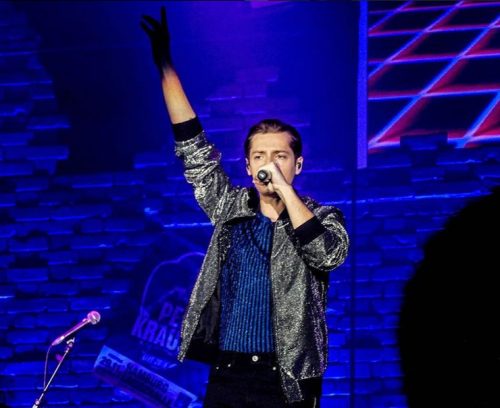
Ben Dolic will not represent Germany

Today, Ben Dolic made an announcement on Instagram about his participation in the 2021 Eurovision Song Contest. He will not represent Germany in the contest. That means, German television (ARD) has to look for another participant. Whether the country will have a national final or not is not known.


“I enjoyed every moment of the Eurovision journey and appreciate everyone who believed in me and has been there every step of the way!
This will truly be a chapter in my life that I will always cherish and look back at!

My career has taken a different direction!
I’ve grown so much as an artist and there is still so much more that I want to achieve.

I have decided not to participate at the Eurovision next year! It has been a hard and a difficult decision to make, but the right one at this moment in time.

Thank you all for being with me on this beautiful ride and giving me your love and support!

And to the one who will be chosen to represent Germany in Rotterdam 2021!
I wish you all well from the bottom of my heart! Enjoy the journey!”

Dolic was supposed to represent Germany in the 2020 Eurovision Song Contest with the song “Violent thing”. We will never know what the result would have been, but in the betting odds he was doing pretty well.

Related news

Eurovision 2026

Road to Vienna: Austria

Just before rehearsals kick off in Vienna, we’ve got one more stop on our daily Road to Vienna: the host country itself, Austria. Cosmó: Austria’s Young Pop Star and student to Eurovision 2026 Cosmó, born Benjamin Gedeon on 18 June 2006 in Budapest, is a 19-year-old Austrian singer-songwriter from Burgenland. He started music early, attending music school at just four years old and learning piano by six. By his early teens, he was already writing songs, inspired by musical theatre, karaoke experiences, and a growing love for pop music. Early Career and TV Breakthrough Cosmó first appeared on The Voice Kids Germany in 2020, gaining early stage experience. His breakthrough came in 2022 when he reached the final under the mentorship of Álvaro Soler. Around the same time, he won a regional songwriting competition with his original track “Fall into Your Arms,” strengthening his reputation as a rising young talent. Building His Sound and Identity After his TV success, Cosmó began performing live across Austria and collaborating with established artists. He formed his own band and developed a distinct pop style influenced by electronic music and club culture. In 2025, he released his debut EP From My Room, showcasing his modern, youthful sound and growing artistic identity.      Now based in Vienna and studying dentistry, Cosmó balances academic life with a fast-growing music career. His name, short for “Cosmopolitan,” reflects his open-minded and global outlook. Tanzschein: A Club Anthem with a Deeper Message At first listen, “Tanzschein” by Cosmó sounds like a high-energy club track built for the dance floor. Neon lights, nightlife excitement, and party energy set the tone—but underneath the upbeat surface lies a layered social commentary. The Club as a Mirror of Society In “Tanzschein,” the nightclub becomes a metaphor for society itself. The lyrics portray partygoers as instinct-driven and performative, highlighting themes of dominance, ego, and social hierarchy. By exaggerating nightlife behavior, the song subtly reflects real-world social dynamics in a humorous yet critical way. The Meaning of the “Dance License” A central concept in the song is the fictional “dance license.” While it sounds playful, it represents emotional intelligence, respect, and self-awareness. Those who “have it” are welcomed into the club, while those who don’t remain outside—symbolizing exclusion caused by ego-driven or impulsive behavior. Satire, Vulnerability, and Growth What makes “Tanzschein” stand out is its balance between satire and sincerity. The song critiques toxic behavior often found in nightlife culture, but it also introduces vulnerability through a character afraid to join the dance floor. This shift transforms the club from a place of competition into one of acceptance and self-expression. A Dance Floor as a Social Lesson Ultimately, “Tanzschein” turns nightlife into a reflection of society. It suggests that true connection goes beyond rhythm and appearance—it requires empathy, awareness, and openness. The song delivers a playful yet thought-provoking message, making it one of the more conceptually rich entries on the Eurovision 2026 stage.   Austria in the Eurovision Song Contest Austria has participated in the Eurovision Song Contest 56 times since its debut in 1957. The country has won three times: in 1966 with Udo Jürgens‘ “Merci, Chérie”, in 2014 with Conchita Wurst‘s “Rise Like a Phoenix.” And ofcourse last year with JJ‘s “Wasted love” Austria has experienced varying success over the years, with several last-place finishes and instances of receiving zero points. The Bookmakers With a guaranteed spot in the Grand Final as last year’s winner, Austria somehow finds itself ranked 32nd with the bookmakers—while only 25 acts will actually compete.  

Read More »
Eurovision 2026
Anja Kroeze

Road to Vienna: Austria

Just before rehearsals kick off in Vienna, we’ve got one more stop on our daily Road to Vienna: the host country itself, Austria. Cosmó: Austria’s Young Pop Star and student to Eurovision 2026 Cosmó, born Benjamin Gedeon on 18 June 2006 in Budapest, is a 19-year-old Austrian singer-songwriter from Burgenland. He started music early, attending music school at just four years old and learning piano by six. By his early teens, he was already writing songs, inspired by musical theatre, karaoke experiences, and a growing love for pop music. Early Career and TV Breakthrough Cosmó first appeared on The Voice Kids Germany in 2020, gaining early stage experience. His breakthrough came in 2022 when he reached the final under the mentorship of Álvaro Soler. Around the same time, he won a regional songwriting competition with his original track “Fall into Your Arms,” strengthening his reputation as a rising young talent. Building His Sound and Identity After his TV success, Cosmó began performing live across Austria and collaborating with established artists. He formed his own band and developed a distinct pop style influenced by electronic music and club culture. In 2025, he released his debut EP From My Room, showcasing his modern, youthful sound and growing artistic identity.      Now based in Vienna and studying dentistry, Cosmó balances academic life with a fast-growing music career. His name, short for “Cosmopolitan,” reflects his open-minded and global outlook. Tanzschein: A Club Anthem with a Deeper Message At first listen, “Tanzschein” by Cosmó sounds like a high-energy club track built for the dance floor. Neon lights, nightlife excitement, and party energy set the tone—but underneath the upbeat surface lies a layered social commentary. The Club as a Mirror of Society In “Tanzschein,” the nightclub becomes a metaphor for society itself. The lyrics portray partygoers as instinct-driven and performative, highlighting themes of dominance, ego, and social hierarchy. By exaggerating nightlife behavior, the song subtly reflects real-world social dynamics in a humorous yet critical way. The Meaning of the “Dance License” A central concept in the song is the fictional “dance license.” While it sounds playful, it represents emotional intelligence, respect, and self-awareness. Those who “have it” are welcomed into the club, while those who don’t remain outside—symbolizing exclusion caused by ego-driven or impulsive behavior. Satire, Vulnerability, and Growth What makes “Tanzschein” stand out is its balance between satire and sincerity. The song critiques toxic behavior often found in nightlife culture, but it also introduces vulnerability through a character afraid to join the dance floor. This shift transforms the club from a place of competition into one of acceptance and self-expression. A Dance Floor as a Social Lesson Ultimately, “Tanzschein” turns nightlife into a reflection of society. It suggests that true connection goes beyond rhythm and appearance—it requires empathy, awareness, and openness. The song delivers a playful yet thought-provoking message, making it one of the more conceptually rich entries on the Eurovision 2026 stage.   Austria in the Eurovision Song Contest Austria has participated in the Eurovision Song Contest 56 times since its debut in 1957. The country has won three times: in 1966 with Udo Jürgens‘ “Merci, Chérie”, in 2014 with Conchita Wurst‘s “Rise Like a Phoenix.” And ofcourse last year with JJ‘s “Wasted love” Austria has experienced varying success over the years, with several last-place finishes and instances of receiving zero points. The Bookmakers With a guaranteed spot in the Grand Final as last year’s winner, Austria somehow finds itself ranked 32nd with the bookmakers—while only 25 acts will actually compete.  

Read More »
Follow Us: