Malmö messages: Fire, costume changes, sand and tradition

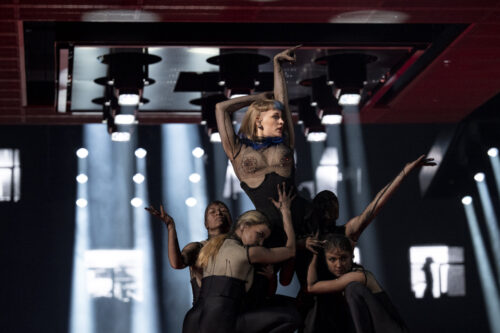
“Pedestal” is the entry that Aiko brings for the Czech Republic. The Czech team announced, although they had said this before, that they would be depicting the five stages of grief. By now, Aiko has reached the fifth stage, acceptance. The four dancers represent denial, anger, bargaining, and depression. The dancers are dressed in black. Aiko herself too, with wide-legged pants. The lighting mainly consists of red and black. And if we are to believe eurovision.tv, there will be flames throughout the song. The ESCZ Instagram account had images of this, but unfortunately removed it.

EBU/Sarah Louise Bennett

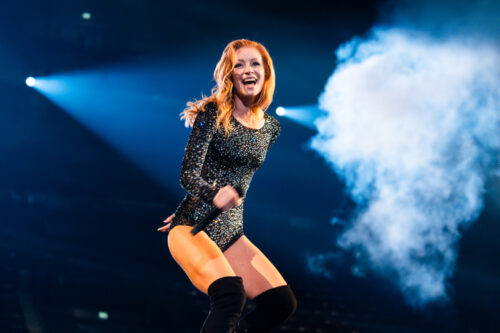
Austria has a costume change act. During her song “We Will Rave,” Kaleen starts in a long white coat with a train, which she later removes. Underneath, she wears a glittery outfit and matching boots. All this takes place under an inverted pyramid, where she and her four dancers perform. The men wear huge sunglasses. Dance plays a major role in this act. Eurovision.tv reports that Kaleen wears a different coat during the second rehearsal. And there’s a lot of smoke. We’re very curious about the singing in this song.

EBU/Corinne Cumming

In contrast to Austria, Denmark’s performance is static: Saba sings her song “Sand” entirely in one spot. She stands on a raised platform. She wears, as during the national final, a white pant suit. Her pockets are filled with sand which she then scatters across the stage. Behind her, a large LED version of herself is projected. The smoke machine is in full operation.

EBU/Sarah Louise Bennett

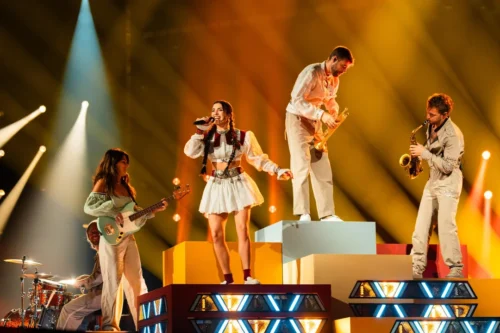
As we move to Armenia, we see a circle of torches. Amidst them, Ladaniva sings their song “Jako.” Singer Jaklin Baghdasaryan wears traditional Armenian attire and has her hair in traditional braids. Many traditional Armenian images are also seen on the LED screens and the cube above the duo.

EBU/Corinne Cumming

Related news

Eurovision 2026

Road to Vienna: Portugal

Road to Vienna: Portugal We cannot wait for the Eurovision Song Contest in Vienna. Therefore, we take a closer look at one of the contestants each day. Today, we highlight: Portugal Bandidos do Cante: Who are they? Bandidos do Cante are a Portuguese vocal group from the Alentejo region, formed by five childhood friends: Miguel Costa, Duarte Farias, Francisco Raposo, Luís Aleixo, and Francisco Pestana. Known for blending traditional cante alentejano with modern pop, the group has created a fresh, emotional sound that connects heritage with contemporary audiences. Early Beginnings and Breakthrough The group started informally in 2022, singing together at gatherings. Their breakthrough came after collaborating on the hit single “Casa” with D.A.M.A. and Buba Espinho, which gained massive radio play in Portugal. Originally called “Os Amigos do Alentejo,” they rebranded to Bandidos do Cante in 2023, marking a new chapter in their career. Hit Singles and Growing Popularity In 2024, they released their debut single “Amigos Coloridos,” which became the most-played Portuguese song on national radio. This success led to over 50 live performances and a rapidly growing fan base.Their 2025 follow-up, “Já Não Há Pardais No Céu,” strengthened their signature style and earned them a Best New Artist nomination at the Play – Portuguese Music Awards. Collaborations with artists like Diogo Piçarra further boosted their visibility. Debut Album and Musical Evolution Their debut album Bairro das Flores (2026) showcases eight tracks that merge traditional folk with modern production. Featuring artists like António Zambujo, the album highlights their artistic growth. A national tour, including sold-out shows in Beja, confirmed their status as one of Portugal’s most promising acts. Eurovision 2026 Journey They  won Festival da Canção , securing their place at the Eurovision Song Contest 2026. Their victory, driven by strong jury and public support, marked a major milestone in their rising international career. Rosa : A Poetic Story of Love and Saudade Rosa is a deeply emotional song about love, memory, and loss. The lyrics create a calm, reflective atmosphere, using nature and silence to evoke nostalgia. At its core, the song connects a past relationship to the image of a rose garden, symbolizing both the beauty of love and the pain of its absence. The Garden as a Symbol of Love The garden represents a once-thriving relationship. It was full of life, care, and emotion. Over time, however, it fades due to neglect, mirroring the decline of love.In the end, only the roses remain. These roses act as powerful symbols, keeping memories alive even after the relationship has ended. The Power of Saudade A key theme in “Rosa” is saudade, a uniquely Portuguese feeling of longing. It blends sadness with warmth and remembrance. The lyrics highlight this through images of a lover’s kiss and the idea of a loved one as the “most beautiful rose.”Even though the relationship is over, the emotional connection remains strong. Portugal in the Eurovision Song Contest. Portugal has been part of the Eurovision Song Contest since 1964, but its track record has been relatively modest. The country achieved its first, and so far only, victory in 2017, when Salvador Sobral won with the song Amar pelos dois. Despite limited success in terms of wins, Portugal is known for sending entries that highlight its rich musical identity. Its songs often blend traditional influences with modern sounds, offering something distinctive on the Eurovision stage. In recent years, the national selection Festival da Canção has played a key role in showcasing diverse genres and introducing new and emerging artists. The Bookmakers This year, confidence in the Portuguese entry is once again low. Currently sitting in 30th place with the bookmakers, it seems likely that Portugal will struggle to qualify for the final.

Read More »
Eurovision 2026
Anja Kroeze

Road to Vienna: Portugal

Road to Vienna: Portugal We cannot wait for the Eurovision Song Contest in Vienna. Therefore, we take a closer look at one of the contestants each day. Today, we highlight: Portugal Bandidos do Cante: Who are they? Bandidos do Cante are a Portuguese vocal group from the Alentejo region, formed by five childhood friends: Miguel Costa, Duarte Farias, Francisco Raposo, Luís Aleixo, and Francisco Pestana. Known for blending traditional cante alentejano with modern pop, the group has created a fresh, emotional sound that connects heritage with contemporary audiences. Early Beginnings and Breakthrough The group started informally in 2022, singing together at gatherings. Their breakthrough came after collaborating on the hit single “Casa” with D.A.M.A. and Buba Espinho, which gained massive radio play in Portugal. Originally called “Os Amigos do Alentejo,” they rebranded to Bandidos do Cante in 2023, marking a new chapter in their career. Hit Singles and Growing Popularity In 2024, they released their debut single “Amigos Coloridos,” which became the most-played Portuguese song on national radio. This success led to over 50 live performances and a rapidly growing fan base.Their 2025 follow-up, “Já Não Há Pardais No Céu,” strengthened their signature style and earned them a Best New Artist nomination at the Play – Portuguese Music Awards. Collaborations with artists like Diogo Piçarra further boosted their visibility. Debut Album and Musical Evolution Their debut album Bairro das Flores (2026) showcases eight tracks that merge traditional folk with modern production. Featuring artists like António Zambujo, the album highlights their artistic growth. A national tour, including sold-out shows in Beja, confirmed their status as one of Portugal’s most promising acts. Eurovision 2026 Journey They  won Festival da Canção , securing their place at the Eurovision Song Contest 2026. Their victory, driven by strong jury and public support, marked a major milestone in their rising international career. Rosa : A Poetic Story of Love and Saudade Rosa is a deeply emotional song about love, memory, and loss. The lyrics create a calm, reflective atmosphere, using nature and silence to evoke nostalgia. At its core, the song connects a past relationship to the image of a rose garden, symbolizing both the beauty of love and the pain of its absence. The Garden as a Symbol of Love The garden represents a once-thriving relationship. It was full of life, care, and emotion. Over time, however, it fades due to neglect, mirroring the decline of love.In the end, only the roses remain. These roses act as powerful symbols, keeping memories alive even after the relationship has ended. The Power of Saudade A key theme in “Rosa” is saudade, a uniquely Portuguese feeling of longing. It blends sadness with warmth and remembrance. The lyrics highlight this through images of a lover’s kiss and the idea of a loved one as the “most beautiful rose.”Even though the relationship is over, the emotional connection remains strong. Portugal in the Eurovision Song Contest. Portugal has been part of the Eurovision Song Contest since 1964, but its track record has been relatively modest. The country achieved its first, and so far only, victory in 2017, when Salvador Sobral won with the song Amar pelos dois. Despite limited success in terms of wins, Portugal is known for sending entries that highlight its rich musical identity. Its songs often blend traditional influences with modern sounds, offering something distinctive on the Eurovision stage. In recent years, the national selection Festival da Canção has played a key role in showcasing diverse genres and introducing new and emerging artists. The Bookmakers This year, confidence in the Portuguese entry is once again low. Currently sitting in 30th place with the bookmakers, it seems likely that Portugal will struggle to qualify for the final.

Read More »
Follow Us: