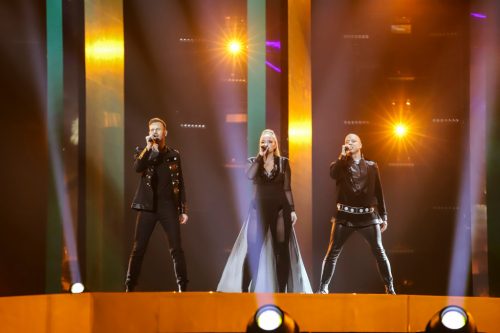
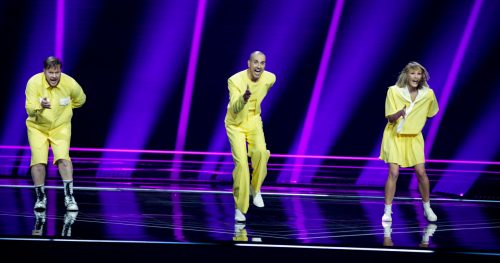
Road to Vienna: Finland As the Eurovision Song Contest 2026 in Vienna approaches, we continue our daily spotlight on this year’s contestants. Today, we focus on Finland. Linda Lampenius & Pete Parkkonen Linda Lampenius: Violin Star Across Genres Linda Lampenius grew up between a theatre family in Helsinki and a farm in Lapinjärvi. At age five, she chose the violin, and by eight she was already touring internationally with the Helsinki Strings. Her early television appearances, combined with a scholarship, highlighted both her strong classical training and natural stage presence. Studies and International Career Lampenius studied at the Sibelius Academy and performed with the Finnish National Opera Orchestra before launching her solo career. Soon, her work expanded internationally, including collaborations with Andrew Lloyd Webber and major orchestras. Pop, Classical and Media Success Lampenius broke into pop with her 1997 debut and achieved global classical success with Linda Brava (1999), released by EMI Classics. Over time, she continued blending styles while building a media career through shows like X Factor Finland and Let’s Dance. Pete Parkkonen: From Idols to Finnish Pop Star Pete Parkkonen grew up in Pihtipudas, Finland, where music was part of everyday life. He began as a drummer but switched to singing as a teenager after stepping in for a missing band vocalist. That unexpected moment shaped his path, leading to experience in bands and live performances. Breakthrough with Idols and Chart Success Parkkonen rose to fame in 2008, finishing third in Idols Finland. His debut single “Girl In a Uniform” became a hit, while his first album The First Album (2009) reached number one in Finland. Follow-up releases and TV appearances quickly established him as a major new artist. Finding His Sound and Expanding Career After early English-language releases, Parkkonen shifted to Finnish pop with hits like “Mitä mä teen,” featuring JVG. He also gained wider attention by winning Dancing with the Stars Finland and Tähdet, tähdet, proving his versatility. Continued Success and Media Presence In later years, Parkkonen released multiple hit singles and the album PETE (2018). He remained a strong presence in Finnish pop, including appearances on Vain elämää, where he showcased his range across different musical styles. Liekinheitin: A Story of Passion and Emotional Conflict “Liekinheitin” explores intense desire mixed with emotional instability, focusing on a relationship driven by chemistry rather than balance. Passion Without Stability The track highlights a powerful physical connection that feels exciting and addictive. At the same time, that intensity brings risk, as the volatile dynamic suggests emotional harm is never far away. Mixed Signals and Inner Conflict Contradiction plays a central role. The connection feels real in private but distant in public, creating confusion. This push-and-pull dynamic keeps the narrator emotionally invested, despite the lack of clarity or security. A Story of Temptation and Risk Ultimately, “Liekinheitin” portrays a toxic yet irresistible bond, capturing the tension between logic and desire—choosing passion even when it may lead to pain. Finland in the Eurovision Song Contest Finland has participated in the Eurovision Song Contest 57 times since its debut in 1961. They never made it to the top-5 until 2006. The country achieved its only victory in that year with Lordi‘s “Hard Rock Hallelujah.” The bookmakers Finland has been dominating the bookmakers’ odds for weeks, firmly holding the number one spot. Could this be the year they secure their second victory in Eurovision history?