Don’t mess with a flag in North Macedonia

You probably haven’t even noticed, but a small thing during the red carpet event yesterday turned into a lot of hassle in North Macedonia.

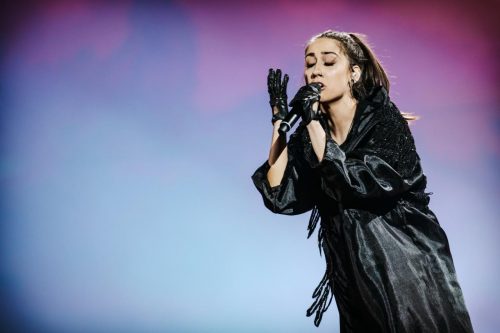
Because contestant Andrea wanted her hands free for the photo, she threw away the flag of North Macedonia. That caused her a big problem. Last night, the national broadcaster MRT came with a statement, in which the broadcaster called the throwing disrespect to the flag. It would even be a violation of North Macedonian law. MRT seriously considered withdrawing Andrea and thus North Macedonia from the competition: 

“MRT expects Andrea to apologize to the citizens for such behavior. The public service is considering the possibility of her withdrawal from Eurovision, although care will be taken not to cause more damage to MRT. All legal possibilities for the strictest sanctioning for this scandal will be taken against those responsible in the Macedonian delegation”.

It ended well in the end: Andrea apologized on national television. This turned this story into a storm in a teacup.

A year before there was also a big fuzz in in the country. Participant Vasil’s video showed three paintings, in the colors of the Bulgarian flag. Besides North Macedonian, Vasil also has Bulgarian ancestors. Nationalist North Macedonians demanded another participant. In the end, the video was taken off the internet and a new version, without the Bulgarian colors, was put online.

Related news

Eurovision 2026

Road to Vienna: France

Road to Vienna: France As the Eurovision Song Contest 2026 in Vienna approaches, we continue our daily spotlight on this year’s contestants. Today we focus on France Monroe: A French-American, 17 years old talent French-American singer Monroe Vata Rigby will represent France at the Eurovision Song Contest 2026 in Vienna. At just 17 years old, she has already built a strong reputation for her powerful voice and captivating stage presence. Her journey from a local church choir to the Eurovision stage highlights both talent and determination. Early Life and Musical Roots Born in 2008 in Salt Lake City to a French mother and American father, Monroe grew up bilingual. She developed an early passion for music through choir singing, piano lessons, and formal vocal training. Her background includes musical theater and youth opera, shaping her expressive performance style. Influenced by artists like Cecilia Bartoli and Céline Dion, she blends classical and contemporary sounds with ease. Breakthrough and Debut Album Monroe gained national attention after winning the 2025 season of Prodiges, France’s leading classical talent show. This victory secured her a contract with Warner Classics and launched her professional career. Later that year, she released her debut album Monroe, praised for its mix of operatic arias and crossover classics. Regarde!: A Cinematic Love Anthem Regarde! stands out as a cinematic and emotionally charged entry, painting a vivid picture of love in a quiet, nocturnal Paris. The track blends intimacy with atmosphere, showing how love can exist even in moments of solitude. Between Longing and Lightning The song captures the tension between searching for love and being unexpectedly struck by it. This dual perspective makes “Regarde!” both reflective and dynamic. It speaks to a universal experience: the quiet hope for connection, followed by the sudden intensity when it finally arrives. Love That Connects and Grounds As the narrative unfolds, the message shifts from introspection to openness. Love is portrayed not as chaotic, but as something grounding and unifying. It creates emotional alignment, drawing people together through a shared rhythm and feeling. A Borderless Message What gives “Regarde!” its strength is its universality. Love is presented as something ever-present and meant to be shared—cutting across cultures, languages, and experiences. This makes the song instantly relatable to a wide audience. Blending poetic imagery with a clear emotional core, “Regarde!” feels both personal and expansive. It’s not just a love song—it’s a reminder that connection can appear anywhere, at any moment, and change everything. France in the Eurovision Song Contest France has participated in the Eurovision Song Contest since its inception in 1956. Soon after joining, the country achieved its first victory in 1958 with André Claveau’s “Dors, mon amour.” France subsequently won four more times: Jacqueline Boyer with “Tom Pillibi” (1960), Isabelle Aubret with “Un premier amour” (1962), Frida Boccara singing “Un jour, un enfant” (1969, a four-way tie), and Marie Myriam’s “L’oiseau et l’enfant” (1977), which remains their latest victory. Moreover, other notable entries include Amina’s “C’est le dernier qui a parlé qui a raison,” which tied for first place but finished second after a tie-break in 1991, and Barbara Pravi‘s “Voilà,” which achieved second place in 2021. Consistently, France competes as part of the “Big Five,” granting automatic qualification for the final. The Bookmakers France is currently sitting in second place with the bookmakers — but can this young singer go all the way and take the win?  

Read More »
Eurovision 2026
Anja Kroeze

Road to Vienna: France

Road to Vienna: France As the Eurovision Song Contest 2026 in Vienna approaches, we continue our daily spotlight on this year’s contestants. Today we focus on France Monroe: A French-American, 17 years old talent French-American singer Monroe Vata Rigby will represent France at the Eurovision Song Contest 2026 in Vienna. At just 17 years old, she has already built a strong reputation for her powerful voice and captivating stage presence. Her journey from a local church choir to the Eurovision stage highlights both talent and determination. Early Life and Musical Roots Born in 2008 in Salt Lake City to a French mother and American father, Monroe grew up bilingual. She developed an early passion for music through choir singing, piano lessons, and formal vocal training. Her background includes musical theater and youth opera, shaping her expressive performance style. Influenced by artists like Cecilia Bartoli and Céline Dion, she blends classical and contemporary sounds with ease. Breakthrough and Debut Album Monroe gained national attention after winning the 2025 season of Prodiges, France’s leading classical talent show. This victory secured her a contract with Warner Classics and launched her professional career. Later that year, she released her debut album Monroe, praised for its mix of operatic arias and crossover classics. Regarde!: A Cinematic Love Anthem Regarde! stands out as a cinematic and emotionally charged entry, painting a vivid picture of love in a quiet, nocturnal Paris. The track blends intimacy with atmosphere, showing how love can exist even in moments of solitude. Between Longing and Lightning The song captures the tension between searching for love and being unexpectedly struck by it. This dual perspective makes “Regarde!” both reflective and dynamic. It speaks to a universal experience: the quiet hope for connection, followed by the sudden intensity when it finally arrives. Love That Connects and Grounds As the narrative unfolds, the message shifts from introspection to openness. Love is portrayed not as chaotic, but as something grounding and unifying. It creates emotional alignment, drawing people together through a shared rhythm and feeling. A Borderless Message What gives “Regarde!” its strength is its universality. Love is presented as something ever-present and meant to be shared—cutting across cultures, languages, and experiences. This makes the song instantly relatable to a wide audience. Blending poetic imagery with a clear emotional core, “Regarde!” feels both personal and expansive. It’s not just a love song—it’s a reminder that connection can appear anywhere, at any moment, and change everything. France in the Eurovision Song Contest France has participated in the Eurovision Song Contest since its inception in 1956. Soon after joining, the country achieved its first victory in 1958 with André Claveau’s “Dors, mon amour.” France subsequently won four more times: Jacqueline Boyer with “Tom Pillibi” (1960), Isabelle Aubret with “Un premier amour” (1962), Frida Boccara singing “Un jour, un enfant” (1969, a four-way tie), and Marie Myriam’s “L’oiseau et l’enfant” (1977), which remains their latest victory. Moreover, other notable entries include Amina’s “C’est le dernier qui a parlé qui a raison,” which tied for first place but finished second after a tie-break in 1991, and Barbara Pravi‘s “Voilà,” which achieved second place in 2021. Consistently, France competes as part of the “Big Five,” granting automatic qualification for the final. The Bookmakers France is currently sitting in second place with the bookmakers — but can this young singer go all the way and take the win?  

Read More »
Follow Us: