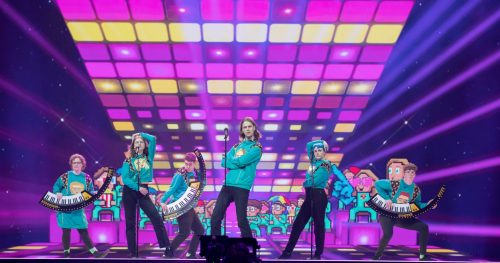
Icelandic broadcaster: COVID infection among Daði og Gagnamagnið (UPDATE)

One of the members of the Icelandic group Daði og Gagnamagnið, Jóhann Sigurður Jóhannsson, has been tested positive on COVID19. Icelandic head of press Rúnar Freyr Gíslason stated this on the website of Icelandic broadcaster RÚV. The positive test makes it unlikely that the Icelandic team will perform today at the rehearsals. It is also unlikely that the group will perform in the live show tomorrow.

It is, according to Gíslasson, not sure whether Daði og Gagnamagnið will perform on Saturday if they reach the final.

It is likely that one of the recordings of previous rehearsals will be used for the live broadcasts where the group can’t take the stage in person.

A statement by EBU has not been made yet. To be continued….

UPDATE: A statement from the EBU says the following: “In close collaboration with the EBU and the host broadcaster, Daði og Gagnamagnið have taken the difficult decision to withdraw from performing in this year’s live Eurovision Song Contest shows, as they only want to perform together as a group. Their song will remain in the competition and we will broadcast their rehearsal performance, recorded on the stage on 13 May.”

photo credits: EBU

Related news

Eurovision 2026

Road to Vienna: Israel

Road to Vienna: Israel We cannot wait for the Eurovision Song Contest in Vienna. Therefore, we take a closer look at one of the contestants each day. Today, we highlight Israel. Noam Bettan: Rise in the Israeli Pop Scene Early Life and Musical Beginnings Noam Bettan was born on 6 March 1998 in Ra’anana, Israel. Raised in a French-Jewish family, he grew up surrounded by music. From an early age, he focused on singing, joining school choirs and local performances. During his teenage years, he developed a strong vocal style, influenced by emotional pop music. After completing his mandatory military service, he chose to fully pursue a career in music. Breakthrough on Israeli Television Bettan first gained national attention in 2018 on the TV show Aviv or Eyal. He reached the final and finished third, which introduced him to a wider audience. Instead of rushing into releases, he spent time refining his voice and artistic direction, working with producers and performing live. From 2021, Bettan began releasing music consistently. Singles like Ahavot leYom Ehad and Ba’ir Sheli helped him gain traction on radio and streaming platforms. In 2023, he released his debut album Me’al HaMayim, marking a key milestone. The single Buba reached number three on the Galgalatz chart, strengthening his position in Israeli pop. Continued Growth and New Releases Following his debut album, Bettan expanded his catalogue with songs such as Sakin BaLev and Lahzor HaBaita. His style remained accessible, with a focus on emotional storytelling. In 2024, he released Pokeach Einayim, based on a poem by a fallen soldier, showing a more reflective side. In 2025, singles like Madame and Sheva Dakot Be-Gan Eden highlighted his consistent output. Eurovision 2026 Journey In 2026, Bettan won HaKokhav HaBa, Israel’s Eurovision selection show. His strong vocals and emotional performances made him a standout contestant. He will represent Israel at the Eurovision Song Contest 2026 in Vienna, marking a natural step forward in his career. Michelle: A Song About Toxic Love Michelle explores a relationship that is both passionate and destructive. The lyrics describe a love that once brought light but eventually turned into emotional pain. After the breakup, the narrator feels lost and struggles to move on, showing how deeply the relationship affected him. Multilingual Storytelling in Pop Music The song stands out for its use of three languages: Hebrew, French, and English. Hebrew expresses raw emotion, French adds a romantic tone, and English helps reach a wider audience. This mix creates an international pop sound while reflecting the complexity of the story. Strong Imagery and Emotional Depth “Michelle” uses clear imagery to highlight heartbreak and confusion. Themes of light and darkness underline the emotional journey. A key metaphor—being “trapped in your carousel”—suggests a cycle of love and pain that the narrator cannot escape.The chorus delivers the main message: letting go is necessary. Although the narrator still feels love, he recognises the relationship as unhealthy. This moment captures the tension between emotional attachment and self-preservation. Israel in the Eurovision Song Contest Israel has participated in the Eurovision Song Contest 45 times since its debut in 1973. The country has won the contest four times: in 1978 (Izhar Cohen & The Alpha Beta’s “A-ba-ni-bi”, 1979 (Gali Atari & Milk and Honey‘s “Hallelujah”), 1998 (Dana International‘s “Diva”), and 2018 (Netta‘s “Toy”). The Bookmakers Israel is currently just outside the Top 5 with the bookmakers. Can it achieve another high ranking?        

Read More »
Eurovision 2026
Anja Kroeze

Road to Vienna: Israel

Road to Vienna: Israel We cannot wait for the Eurovision Song Contest in Vienna. Therefore, we take a closer look at one of the contestants each day. Today, we highlight Israel. Noam Bettan: Rise in the Israeli Pop Scene Early Life and Musical Beginnings Noam Bettan was born on 6 March 1998 in Ra’anana, Israel. Raised in a French-Jewish family, he grew up surrounded by music. From an early age, he focused on singing, joining school choirs and local performances. During his teenage years, he developed a strong vocal style, influenced by emotional pop music. After completing his mandatory military service, he chose to fully pursue a career in music. Breakthrough on Israeli Television Bettan first gained national attention in 2018 on the TV show Aviv or Eyal. He reached the final and finished third, which introduced him to a wider audience. Instead of rushing into releases, he spent time refining his voice and artistic direction, working with producers and performing live. From 2021, Bettan began releasing music consistently. Singles like Ahavot leYom Ehad and Ba’ir Sheli helped him gain traction on radio and streaming platforms. In 2023, he released his debut album Me’al HaMayim, marking a key milestone. The single Buba reached number three on the Galgalatz chart, strengthening his position in Israeli pop. Continued Growth and New Releases Following his debut album, Bettan expanded his catalogue with songs such as Sakin BaLev and Lahzor HaBaita. His style remained accessible, with a focus on emotional storytelling. In 2024, he released Pokeach Einayim, based on a poem by a fallen soldier, showing a more reflective side. In 2025, singles like Madame and Sheva Dakot Be-Gan Eden highlighted his consistent output. Eurovision 2026 Journey In 2026, Bettan won HaKokhav HaBa, Israel’s Eurovision selection show. His strong vocals and emotional performances made him a standout contestant. He will represent Israel at the Eurovision Song Contest 2026 in Vienna, marking a natural step forward in his career. Michelle: A Song About Toxic Love Michelle explores a relationship that is both passionate and destructive. The lyrics describe a love that once brought light but eventually turned into emotional pain. After the breakup, the narrator feels lost and struggles to move on, showing how deeply the relationship affected him. Multilingual Storytelling in Pop Music The song stands out for its use of three languages: Hebrew, French, and English. Hebrew expresses raw emotion, French adds a romantic tone, and English helps reach a wider audience. This mix creates an international pop sound while reflecting the complexity of the story. Strong Imagery and Emotional Depth “Michelle” uses clear imagery to highlight heartbreak and confusion. Themes of light and darkness underline the emotional journey. A key metaphor—being “trapped in your carousel”—suggests a cycle of love and pain that the narrator cannot escape.The chorus delivers the main message: letting go is necessary. Although the narrator still feels love, he recognises the relationship as unhealthy. This moment captures the tension between emotional attachment and self-preservation. Israel in the Eurovision Song Contest Israel has participated in the Eurovision Song Contest 45 times since its debut in 1973. The country has won the contest four times: in 1978 (Izhar Cohen & The Alpha Beta’s “A-ba-ni-bi”, 1979 (Gali Atari & Milk and Honey‘s “Hallelujah”), 1998 (Dana International‘s “Diva”), and 2018 (Netta‘s “Toy”). The Bookmakers Israel is currently just outside the Top 5 with the bookmakers. Can it achieve another high ranking?        

Read More »
Follow Us: