About
Biography
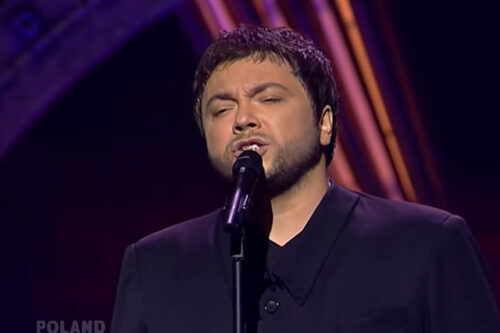
Mietek Szcześniak (born 9 July 1964) is a Polish singer-songwriter celebrated for his soulful, distinctive voice and musical versatility. Over nearly four decades, he has earned wide critical acclaim in Poland, winning multiple music contests and awards. He gained international attention by representing Poland in the Eurovision Song Contest 1999, but his achievements go far beyond that one event. Szcześniak’s rich career spans pop, jazz, soul, and gospel.
Early Life and Beginnings
Born in Kalisz, Poland, Szcześniak showed musical talent from a young age. He began singing publicly at six years old in a children’s group called Ikary. As a teenager he formed a band, Funk Factory, which even earned some radio airplay in 1984. At 21, he made a stunning debut by winning the grand prize at the National Festival of Polish Song in Opole (1985). He also triumphed at the Sopot International Song Festival in 1989, taking home the Amber Nightingale award. During this time Szcześniak honed his craft by studying jazz and pop music at the Academy of Music in Katowice, laying a strong foundation for his professional career.
National Stardom in the 1990s
After years of live performing under the communist regime, Szcześniak finally released his debut album Niby nowy (“Like New”) in 1990. The record immediately hit the Polish charts as the country entered a new era of freedom. Throughout the 1990s he followed up with a string of successful albums that showcased his vocal range and songwriting. His 1998 release Czarno na Białym (“Black on White”) was a critical highlight. It earned nominations for the prestigious Fryderyk music awards and won Szcześniak the prize for Best Male Vocalist. By the end of the decade, he was firmly established as a star in Poland’s pop and jazz scene.
In 1999, Szcześniak reached a wider European audience by representing Poland at the Eurovision Song Contest with the ballad “Przytul mnie mocno” (“Hold Me Tight”). He was notably the first male singer to represent Poland in the competition, finishing 18th in the final. That same year, he teamed up with famed Polish vocalist Edyta Górniak on “Dumka na dwa serca” (“Dumka for Two Hearts”), the theme song for the epic film With Fire and Sword. The sweeping duet became one of the most popular Polish film songs ever, further boosting Szcześniak’s profile. It even earned him a special Golden Duck award (a Polish film industry prize) in 2007 for Best Film Song.
Evolving Style and Collaborations in the 2000s
Into the 2000s, Szcześniak continued to evolve as an artist. He wove gospel and inspirational elements into his songs, drawing on his Christian faith. He collaborated with the faith-based band New Life’M and the gospel choir Deus Meus, blending soulful pop with spiritual themes. This period saw him embracing a more reflective side to his music while maintaining mainstream appeal.
Szcześniak also used his music for philanthropic efforts. He donated all proceeds from his 2001 album Mężczyźni kobietom (“Men for Women”) to support breast cancer screening and treatment programs. In 2003, he performed at a special concert in the Vatican to honor Pope John Paul II’s 25th anniversary as Pope. That was a nod to his significance in Polish culture. Throughout the decade, Szcześniak remained a fixture on the Polish music scene. He regularly appeared at major festivals like Opole and continuing to win accolades at home and abroad.
International Projects and Recent Years
In 2011, Szcześniak released Signs, his first English-language album. An album which he co-wrote with American songwriter Wendy Waldman. Recorded between Poland and the United States with a team of top musicians, Signs showcased his ability to bridge musical worlds. It even features gospel tracks recorded with legendary arranger H.B. Barnum and his Los Angeles choir. This project broadened Szcześniak’s international reach and introduced his voice to new audiences.
He continued to push musical boundaries with acclaimed jazz-influenced projects mid-decade. In 2015 he teamed up with jazz pianist Krzysztof Herdzin for Songs from Yesterday, an album of classic jazz and pop standards. This album was followed in 2016 by Nierówni, which set the poetry of Polish legend Jan Twardowski to Brazilian bossa nova arrangements with guitarist Paulinho Garcia. Both albums achieved platinum status in Poland.
Today, Mietek Szcześniak remains an active and beloved figure in Polish music. He frequently appears on television, at concert halls, and in charity events, often singing alongside choirs or orchestras. His distinctive voice can be heard everywhere from pop radio and jazz festivals to movie soundtracks and even Polish dubs of animated films. In recent years, he has continued to release new music, including English-language gospel singles such as “There’s Water for You” (2020). This reunited him with Wendy Waldman and H.B. Barnum.