About
Biography
Early Life and the Start of a Musical Journey
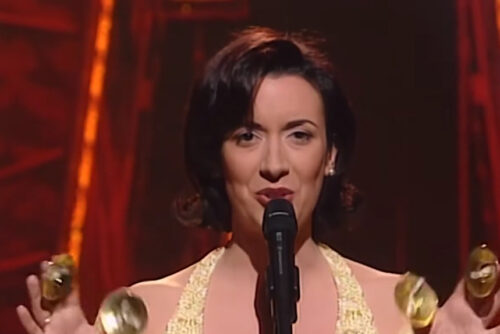
Marianna Zorba was born on 1 December 1967 in Athens, Greece. From an early age, she developed a deep love for music, particularly Greek folk and ethnic sounds. She loves ethnic and folk music. That passion shaped her artistic identity from the very beginning. Rather than chasing mainstream pop, she stayed true to her roots and built her craft slowly and steadily. She sang in small clubs and pubs until she was discovered by Manolis Manousselis. That discovery turned out to be a turning point; not just professionally, but personally too.
First Albums and Growing Recognition
Once Marianna started working with Manousselis, her career moved forward quickly. She released two albums, Diavatirio Psixis and Akou Loipon, in 1995 and 1996, both through Warner Music. Diavatirio Psixis translates to “Soul Passport”, while Akou Loipon means “So, Listen to That”. Both titles reflecting her personal and expressive approach to songwriting. These releases helped her build a following among fans of Greek folk-influenced pop. Furthermore, working with a major label like Warner Music showed that the Greek music industry had taken her seriously as an artist.
Eurovision 1997 and International Attention
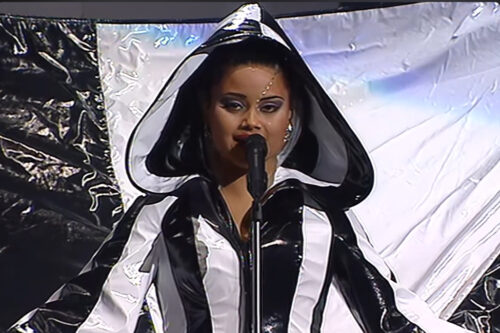
In 1997, Marianna took a big step onto the international stage. Greece internally selected her to represent the country at the Eurovision Song Contest 1997 with the song “Horepse”. “Horepse” scored 39 points and reached 12th place at the contest in Dublin, Ireland. The song, written entirely in Greek, stood out for its sensual, folk-inspired atmosphere. Meanwhile, behind the scenes, something equally significant unfolded: Manousselis became her fiancé just one week before the grand final, and a few weeks after the contest they married.
A Difficult Return Home
Despite a solid result at Eurovision, Marianna’s homecoming proved tough. The Greek press turned against Marianna. That led her to decide to stop singing professionally. Nevertheless, Marianna did not disappear from music entirely. Instead, she chose a quieter but equally meaningful path, one that kept music at the centre of her life without the harsh glare of public attention.
A New Life in Crete
After several years, Marianna and Manolis made a significant life change. They decided to move to Crete in 2002, where he works as an architect and she as a music teacher. Together they formed the duo Notios Anemos, which means “Southern Wind”, and they perform in music festivals, concerts and theatrical plays in Crete. As a result, Marianna found a way to stay connected to performing while building a stable, rooted life on the island. They also published a record together in 2005. The duo’s name suits them well. It’s a warm, steady wind from the south, bringing music to the people of Crete.
Marianna Zorba Today
Today, Marianna Zorba continues her work as a music teacher, passing her love of folk music on to the next generation of young Greek singers. She remains a beloved figure among Eurovision fans and folk music enthusiasts alike. She became an honorary member of INFE Greece, the International Fan Network for Eurovision in Greece, a recognition that highlights the affection fans still hold for her and her 1997 performance. In 2018, she also appeared at the Weltmusik Festival in Offenbach, Germany, showing that her voice and her story still resonate with audiences well beyond Greece’s borders.